
It is Tuesday morning.
I knock, walk into the room, say hello, and walk right back out.
“Call an ambulance.”
Years of clinical training have left me with the knack for being able to take one glance at a patient and know that they are sick. Very, very sick. They have that look about them—maybe their breathing is a bit too rapid, maybe their lips are a bit too blue, maybe their eyes are expressionless or maybe terrified while they slump in their chair, pale, with swollen legs and clammy skin. Everything speeds up and slows down at the same time. I do what I need to do and so does my team. It is a dance we know well, and soon the patient is off to the hospital. I take a few notes and take a few breaths, and I knock on the next door.
Other times, I smile, ask about the new grandchild, about the latest trip, the upcoming retirement, the gym, their diet, their new medication. The labs are in the green. Their blood pressure is fine. But they leave, and I just can’t let it go. I wake in the night, and something haunts me; something didn’t fit. Something I might not have the words for yet. It whispers at first, then screams: something is not the way it should be. It sends me poring through the chart for a hint or a clue. I toss it over and over in my mind. It leaves me a little restless and anxious sometimes, but I can’t put down this sort of love.
I am a family physician. By this point in my career, I have knocked on more doors than I can count. Behind each one, there is a person, a story, a pattern I learn over years. I don’t just read the patient against a textbook, or against a triage checklist. I read them against themselves. The question is not “Is this bad?” The question is “Does this fit them?” It is a different way of knowing, and one that only develops through a long-term relationship.
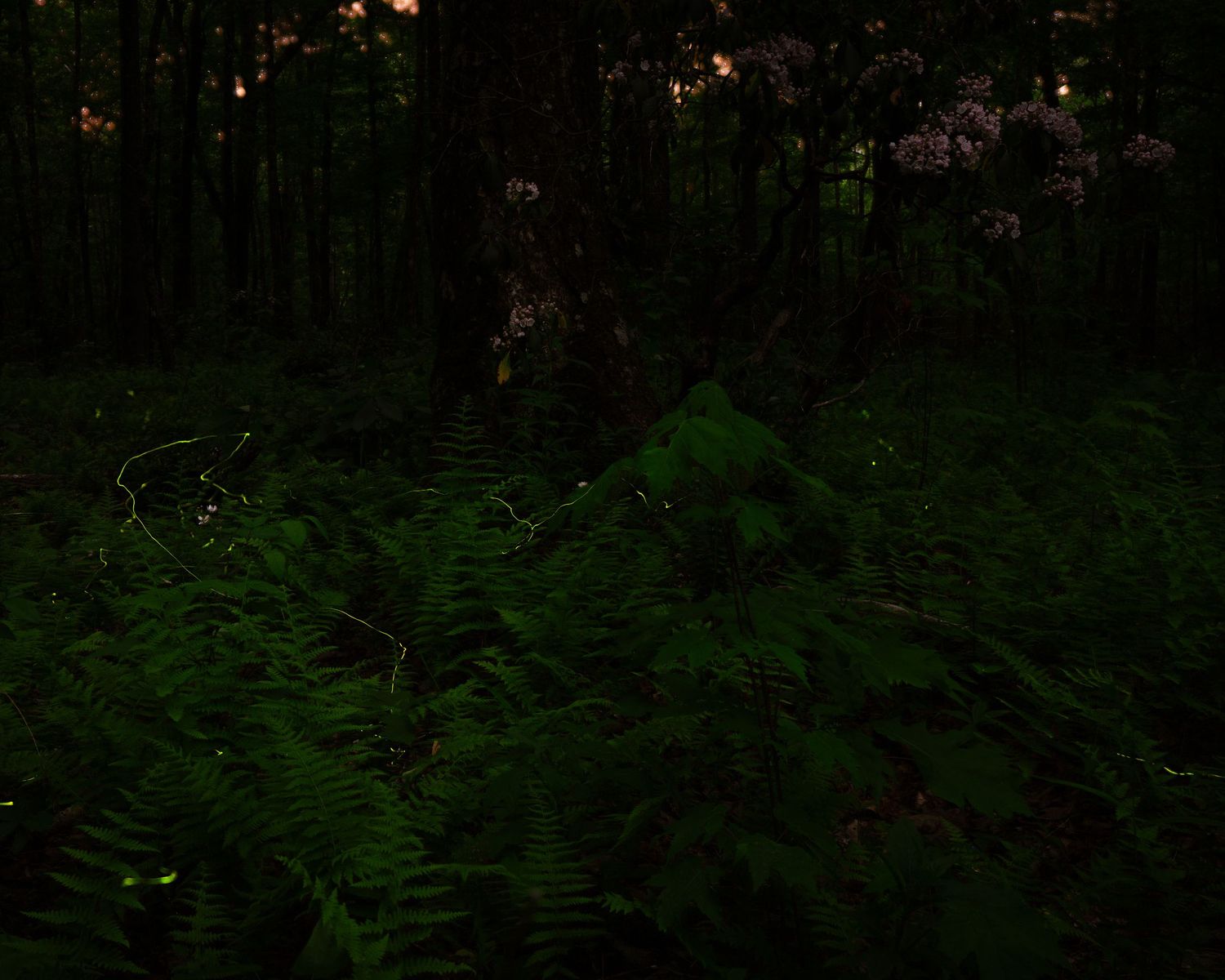
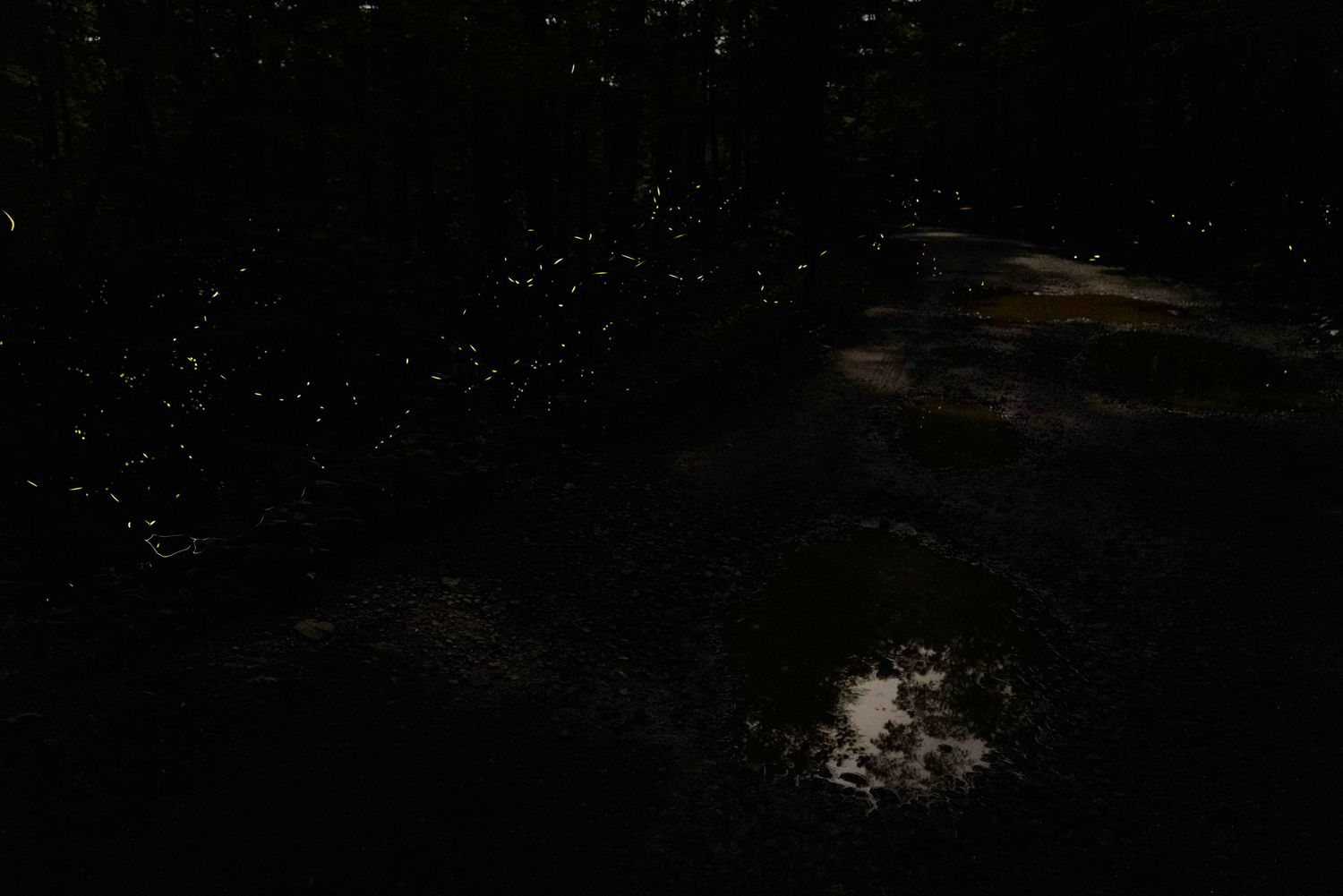
Deep in Appalachia, there are hollows I have visited for years on the darkest nights in early summer, for weeks at a time. I go despite moonlight. I go despite rain. I breathe in the forest and listen to the whippoorwill’s call, and I watch the beetles emerge from the gathering dark, ready to light up the next hours with their mating display. A one-time visitor wouldn’t know that these fireflies are a week late this year, that the creek is low for June, that last year the blue ghosts filled this landscape, but now they only cluster next to the muddy puddles.
You can walk a ridge here and read sick or not sick on it — the hemlocks going gray from woolly adelgid, drought-stress in the canopy, the scars from the landslide, the tangle of oaks blown-down. But a ridge read once is only the surface; the deeper reading, like the deeper knowing of a patient, takes years.
On the first day of residency, my program director addressed our anxiety about our upcoming training and how little we felt we knew. We had studied the books, passed the tests, met some patients, and were awarded our titles, but we were far from comfortable practicing on our own. He assured us that our job was to just keep showing up, and to trust that over the next few years, we would learn enough. He taught that repetition and attention were the portal to transform into the clinicians we longed to be. Our job was to just not quit.
We don’t develop the sick/not sick instinct from a textbook, though we all start there. It comes from being in the room with a patient a thousand times. Same with knowing a landscape: the fireflies, the blue ghost timing, the light. Presence over hundreds of nights is what trains the eye. I have a hand-painted canvas on my mantle that holds a Corita Kent quote: “Find a place you trust and try trusting it for a while.” Through the years, I have learned I can wander up a mountain or into a forest and read it the way I’d read a patient—what has changed and what it portends.
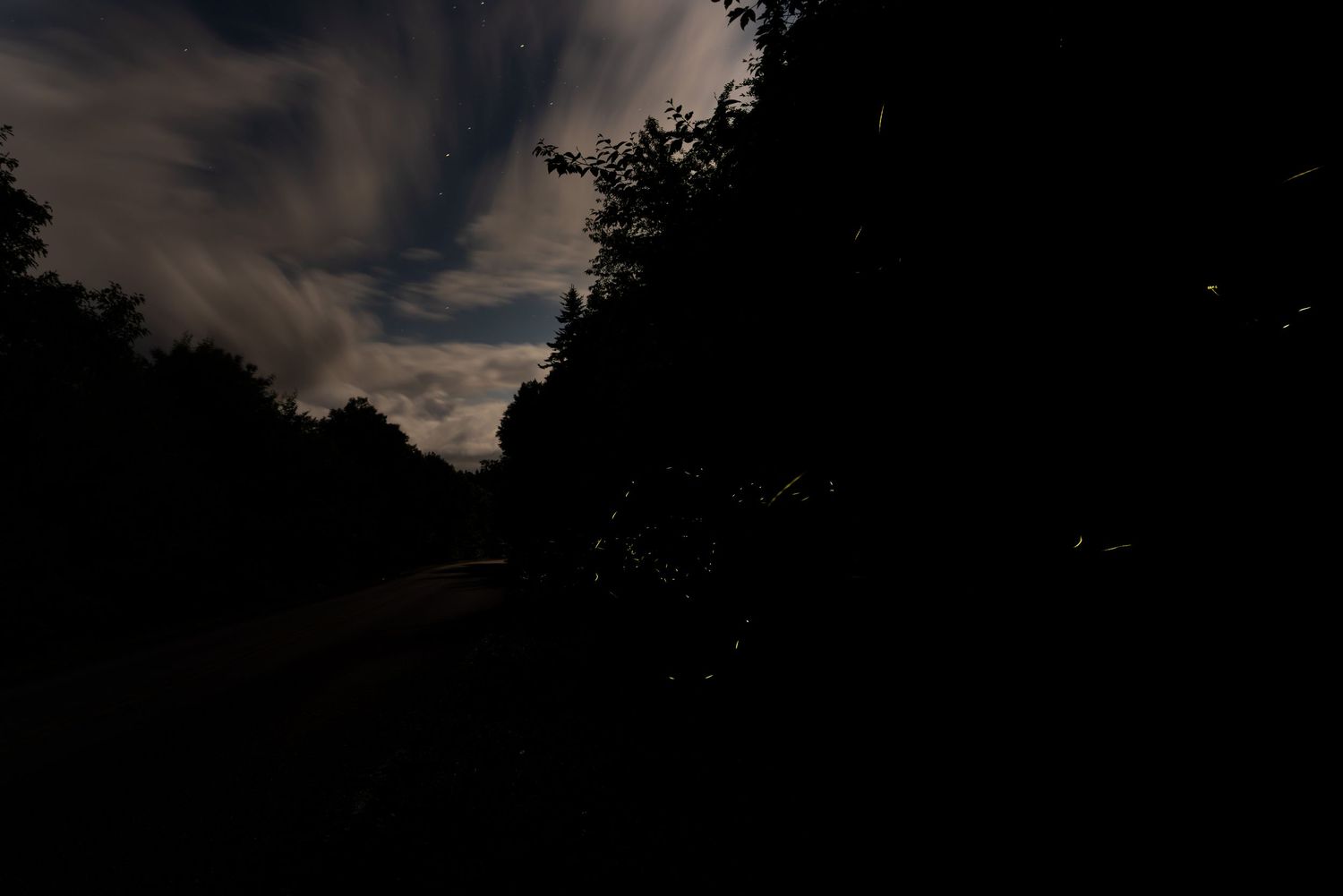
A casual visitor wouldn’t know that three years ago, the lightning sent the synchronous males into a fury of flashing on this hill, or that the maintenance crew mowed down the field the week the light show would have peaked. They would not notice what changed after the prescribed burn, or that they rebounded the year after this road was closed from Helene damage. I know, because I know my patient. I know, because I show up over and over.
Continuity over years.
Some of my patients are dying, and still they come for their visits. Not because there is anything I can fix, but because to not visit would feel wrong. Part of staying connected to what is not yet gone is staying connected through relationship. It is a privilege to see them even when there is nothing I can save.
Still, I look back, wondering. What could I have done differently? Did I miss something? Did I fail them?
There is an intimacy in this kind of being haunted. Having the eye to notice what doesn’t fit means running it in reverse too; the instinct that fires forward in ten seconds also runs backward. That’s the shadow cost of being the doctor whose read is worth trusting; you can’t have the gift without the ghost. The eye good enough to read “sick or not sick” is good enough to torment you with what it might have read differently.
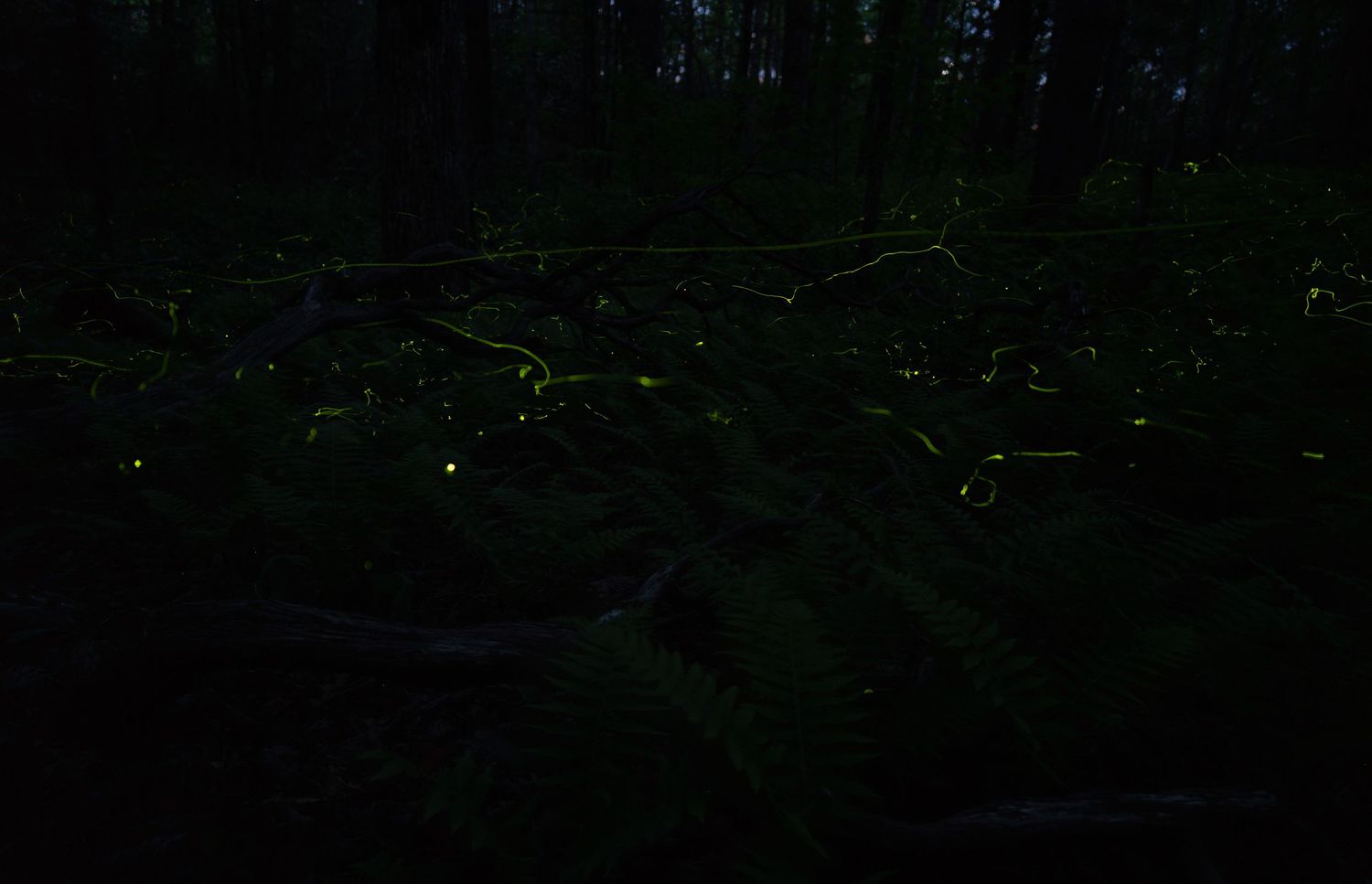
Being a naturalist in the Anthropocene is sitting in the family physician’s position at the deathbed, except the patients are the places you love, and you are the one holding a baseline. You know what well looked like in those darkened hollows. You can read the subtle things—this isn’t what this cove is supposed to sound like in May, or that decades ago, there were more salamanders along this trail, or that your windshield is still clean after your summer drives now, or that the September ashes should be laden with berries, but are sun-scorched and empty.
More and more, you know enough to read that there is nothing you can do. You are sitting with someone you can’t save. The hemlocks are going. The firefly displays drift with the warming, the dark itself is receding. And you keep going anyway, not because your presence saves the fireflies, but to stop going would be its own kind of abandonment. Presence may be the only thing left to give.
My patient has metastatic cancer. I have looked at his chart, closed my eyes and imagined all his visits this past decade. I didn’t miss a thing. The guilt is not that I have done wrong; it is my grief that no matter what, soon he will be gone and I will still be here.
And yet, deep in the woods, it isn’t that simple. I am part of the species that is robbing the night of its darkness. I am part of the species that is still implicated in the rising heat. The very thing that will destroy the firefly habitat will eventually destroy me.
My residency director died a few years ago but his words still stay with me. I remain a family physician whether I am walking into the exam room or wandering in the forest on a humid summer night. Just keep showing up.
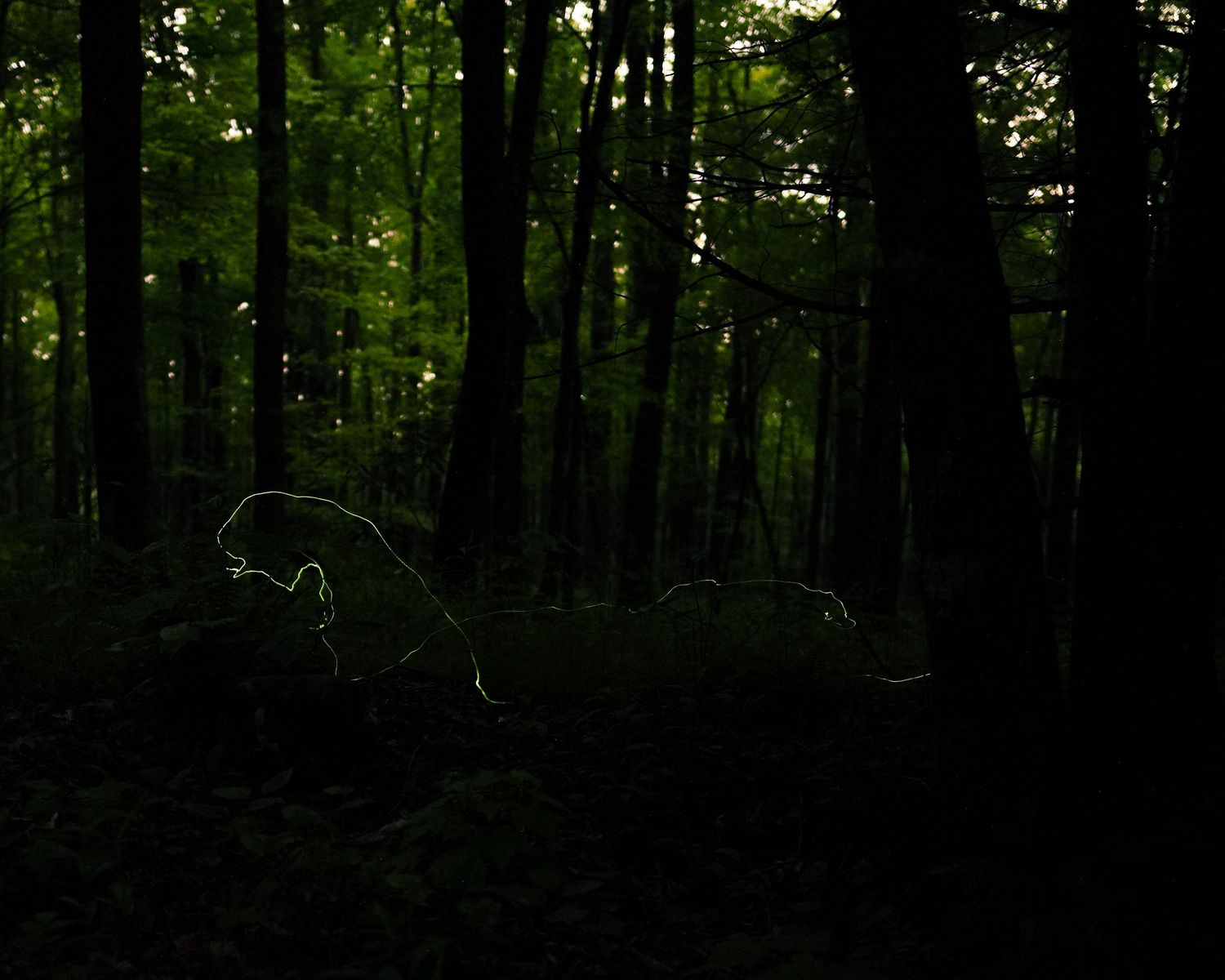
In the places where curative medicine ends, we realize that showing up might be the only thing that was ever actually the point. But this grief doesn’t ask for guilt. What it asks for, perhaps, is going back to the hollows, holding the baseline, photographing the dark before it’s gone, staying in relationship with what’s still alive. It saves nothing, but it is not nothing.
Maybe the only reply I will ever have to “did I fail them” that isn’t a lie: I showed up, and kept showing up, even when the showing up was the whole of what I had to give. Even when what I showed up for was the unphotogenic, unsaveable part.
When the glory of the moment is long past, I will still show up when there is nothing to gain and nothing to post. I still believe that bearing witness to the fading is a sacred vocation, and that maybe these moments of vigil will be my finest hours.